


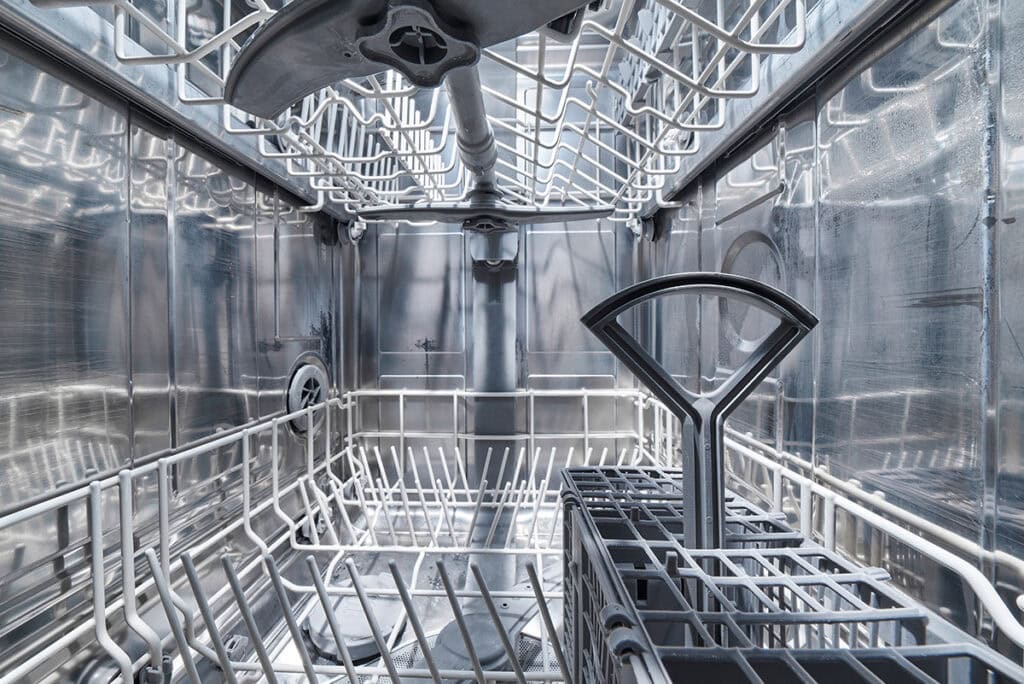
A dishwasher is one of the ultimate modern conveniences, saving you hours of standing at the kitchen sink. But when it breaks down, you’re suddenly left with a mountain of greasy plates, cloudy glasses, and a kitchen routine turned upside down.
Because dishwashers rely on a precise balance of water pressure, heat, detergent delivery, and drainage, even a minor component failure can stop the whole appliance from functioning as it should.
Here are the five most common dishwasher problems homeowners experience, along with exactly how a professional appliance repair engineer safely diagnoses and resolves them.
1. Dishes Come Out Dirty or Covered in Film
What you experience: The cycle completes, but your plates still have baked-on food, or your glasses look cloudy, white, and gritty.
How We Solve This:
- Unblocking Spray Arms
- Over time, seeds, food debris, or hard water limescale can clog the tiny jet holes in the rotating spray arms. We will remove the arms, clear the blockages, and check that they spin freely to ensure full water coverage.
- Over time, seeds, food debris, or hard water limescale can clog the tiny jet holes in the rotating spray arms. We will remove the arms, clear the blockages, and check that they spin freely to ensure full water coverage.
- Inspecting the Wash Impeller and Circulation Pump
- If the spray arms are clear but water isn’t circulating with enough pressure, the main pump impeller might be damaged or stripped. We will inspect the pump housing and test the motor to ensure water is pumping forcefully through the machine.
- If the spray arms are clear but water isn’t circulating with enough pressure, the main pump impeller might be damaged or stripped. We will inspect the pump housing and test the motor to ensure water is pumping forcefully through the machine.
- Checking the Water Inlet Valve
- If the machine doesn’t fill with enough water in the first place, the dishes won’t clean properly. We will test the inlet valve electrically and mechanically to make sure the tub fills to the correct operational level.
2. The Dishwasher Won’t Drain
What you experience: At the end of the program, you open the door to find a pool of dirty, stagnant water sitting at the bottom of the tub.
How We Solve This:
- Clearing the Sump and Filter Assembly
- Heavy food waste, broken glass, or labels from jars can bypass the fine mesh filters and clog the sump area. We will safely remove the filters, clear out any hidden debris, and check the non-return check valve.
- Heavy food waste, broken glass, or labels from jars can bypass the fine mesh filters and clog the sump area. We will safely remove the filters, clear out any hidden debris, and check the non-return check valve.
- Testing the Drain Pump Motor
- If the paths are clear but the water won’t budge, the drain pump motor may be jammed or electrically dead. We will test the pump with a multimeter. If the motor windings are blown, we will then swap it out for a new replacement.
- If the paths are clear but the water won’t budge, the drain pump motor may be jammed or electrically dead. We will test the pump with a multimeter. If the motor windings are blown, we will then swap it out for a new replacement.
- Checking the Drain Hose and Waste Pipe Connection
- We will inspect the flexible drain hose behind the machine for kinks, sagging, or internal fat blockages, ensuring the wastewater has a clear path out into the household plumbing.
3. The Dishwasher Is Leaking Onto the Floor
What you experience: You notice water dripping from beneath the door, or a puddle forming under the kitchen counter during a wash cycle.
How We Solve This:
- Replacing Worn Door Seals: The main perimeter gasket and the lower door seal (the bottom door gasket) keep water inside the tub. Over time, grease and detergent degrade the rubber, or a misaligned rack cuts into it. The engineer will replace the damaged seals to re-establish a watertight closure.
- Inspecting the Float Switch Safety System: Modern dishwashers have an internal float switch in the bottom base tray. If water leaks internally, the float rises to trip the safety switch, halting the cycle and turning on the drain pump. The engineer will trace the leak inside the base to find if a hose or pump casing has split.
- Checking the Spray Arm for Splits: A split or cracked plastic spray arm can create a direct, pressurized “wave” of water aimed straight at the door seal, forcing water past it. The engineer will inspect the seams of the arms for structural failure.
4. Water Is Not Heating or Dishes Won’t Dry
What you experience: The cycle finishes, but the dishes are dripping wet and cold, or the dishwasher stops mid-cycle because the water can’t reach the correct operating temperature.
How We Solve This:
- Testing the Heating Element
- Dishwashers use a flow-through heater or an exposed element to heat water up to 60°C – 75°C. We will test the element’s resistance. If it has burned out, it will need to be replaced.
- Dishwashers use a flow-through heater or an exposed element to heat water up to 60°C – 75°C. We will test the element’s resistance. If it has burned out, it will need to be replaced.
- Checking the Thermistor (Temperature Sensor)
- The control board relies on a thermistor to know how hot the water is. If this sensor sends the wrong reading, the machine won’t heat. We will check its resistance levels against manufacturer specifications.
- The control board relies on a thermistor to know how hot the water is. If this sensor sends the wrong reading, the machine won’t heat. We will check its resistance levels against manufacturer specifications.
- Inspecting the Drying Fan or Vent
- For models that use active drying systems, a faulty vent flap or a failed exhaust fan can leave moisture trapped inside the machine instead of letting it escape, causing heavy condensation on your clean dishes.
5. The Dishwasher Won’t Start or Lights Are Flashing
What you experience: Pressing the start button does nothing, or the machine continuously bleeps and displays an error code or flashing fault lights.
How We Solve This:
- Testing the Door Latch and Microswitch
- A dishwasher will never run if it thinks the door is open. If the latch mechanism is broken or the internal microswitch fails to signal that the door is safely shut, the machine remains idle. We will check the alignment and electrical continuity of the door switch.
- A dishwasher will never run if it thinks the door is open. If the latch mechanism is broken or the internal microswitch fails to signal that the door is safely shut, the machine remains idle. We will check the alignment and electrical continuity of the door switch.
- Reading and Decoding Error Logs
- Many modern dishwashers store specific fault codes in their modules. We can read and diagnose these errors, pinpointing whether the issue is a suspected water heating fault, filling error, or internal leak.
- Many modern dishwashers store specific fault codes in their modules. We can read and diagnose these errors, pinpointing whether the issue is a suspected water heating fault, filling error, or internal leak.
- Checking the Control Module
- If the wiring and switches are sound, the main printed circuit board (PCB) may have suffered a component failure. We will test for voltage supply to isolate whether the main control board needs replacing or reprogramming.
⚠️ Leave It to the Professionals
Dishwashers involve an intricate mix of electrical circuits, pressurized water inlets, and complex drainage systems hidden behind your kitchen cabinetry. Attempting a DIY repair without specific training can lead to electrical hazards, severe kitchen flooding, or permanent damage to your integrated furniture. A qualified appliance repair engineer has the specialised tools, knowledge and safety equipment to get the job done right.